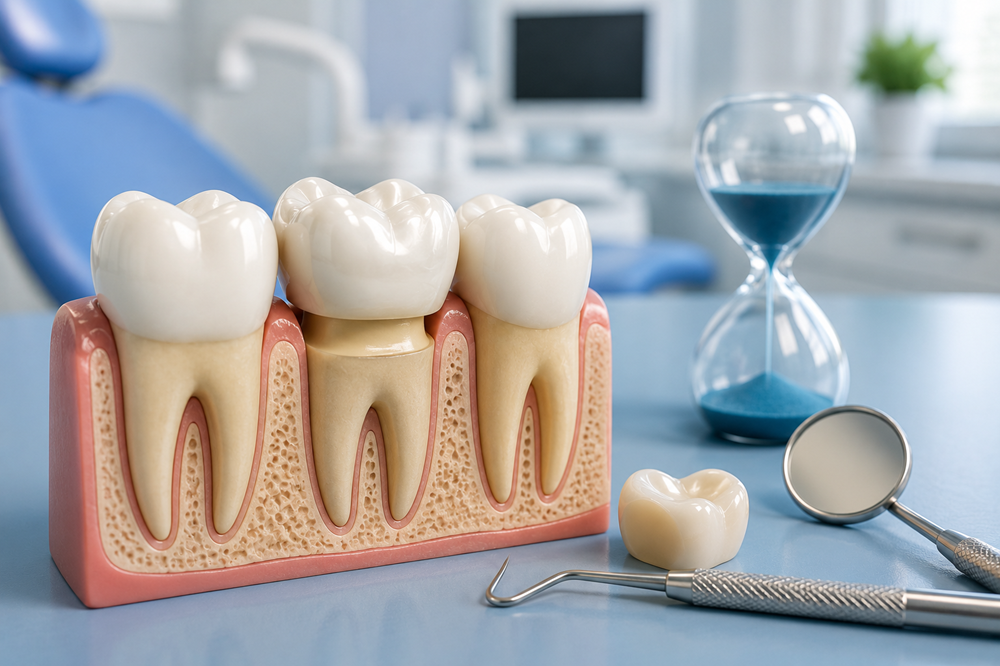

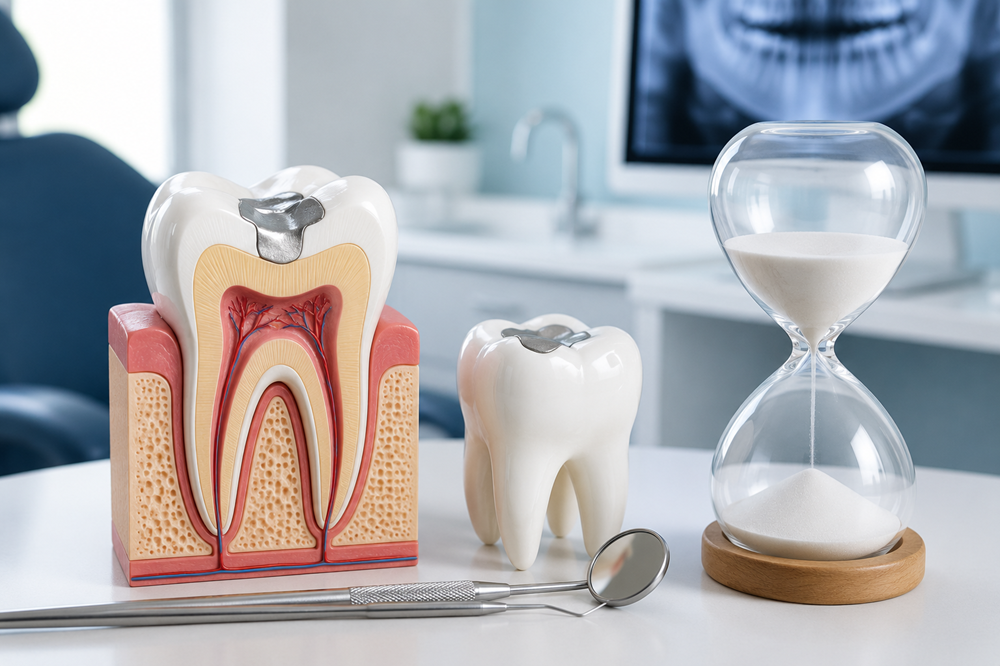
A dental filling helps repair a tooth damaged by decay or minor cracks. It protects the tooth and helps you chew comfortably again. If you are in search of dental fillings near you, many questions arise: “How long will my filling last?” The answer depends on the type of filling, your daily habits, and how well you care for your teeth.
Fillings are strong, but they do not last forever. Over time, they can wear down, crack, or loosen. Regular dental visits can help spot problems early and keep your smile healthy.
What is a Dental Filling?
A dental filling is a material used to fill a hole caused by a cavity. After removing the damaged part of the tooth, the dentist fills the space to protect the tooth from further decay.
Common filling materials include:
- Composite resin (tooth-colored)
- Silver amalgam
- Gold
- Ceramic
Each type has a different lifespan and appearance.
How Long Do Different Dental Fillings Last?
The life of a filling can vary from person to person. Here is a simple guide:
| Type of Filling | Average Lifespan |
| Composite Resin | 5 to 10 years |
| Silver Amalgam | 10 to 15 years |
| Gold Fillings | 15 to 20 years |
| Ceramic Fillings | Around 15 years |
These numbers are estimates. Some fillings may last longer with proper care.
What Affects the Life of a Filling?
Several things can affect how long your filling stays in good shape.
Your Eating Habits
Hard foods can put pressure on fillings. Chewing ice, hard candy, or popcorn kernels may damage them over time.
Sugary foods and drinks can also increase the risk of new cavities around the filling.
Teeth Grinding
Grinding or clenching your teeth can wear fillings down faster. It often happens during sleep and may cause cracks or loose fillings.
Oral Hygiene
Brushing and flossing every day helps prevent decay around the filling. Poor cleaning habits may shorten the life of the filling.
Size and Location of the Filling
Large fillings usually wear out faster than small ones. Fillings on back teeth also handle more chewing pressure than front teeth.
How Can You Tell if a Filling Needs Replacement?
Fillings do not always fail suddenly. Many signs appear slowly over time.
Watch for these symptoms:
- Tooth sensitivity.
- Pain when biting.
- Rough or cracked filling.
- Dark spots around the filling.
- Food is getting stuck in one area.
- A loose filling.
If you notice any of these signs, visiting a dentist near you can help prevent bigger dental problems.
Can Fillings Get Cavities Again?
Yes, a tooth with a filling can still get a cavity. New decay may form around the edges of the filling if bacteria build up there.
That is why regular cleanings and exams are important. Early treatment can stop the problem before it spreads deeper into the tooth.
How Can You Make Fillings Last Longer?
Good habits can help your fillings stay strong for many years.
Helpful Tips for Long-Lasting Fillings
- Brush twice daily with fluoride toothpaste
- Floss every day
- Avoid chewing hard objects
- Limit sugary snacks and drinks
- Wear a nightguard if you grind your teeth
- Visit your dental clinic regularly
Small changes in your routine can make a big difference over time.
Are Tooth-Colored Fillings Durable?
Many people choose composite fillings because they blend in with natural teeth. They are commonly used for front teeth and visible areas.
Modern tooth-colored fillings are stronger than before, but they may not last as long as metal fillings in areas with heavy chewing pressure.
Still, with proper care, they can remain in good condition for many years.
Do Children Need Dental Fillings Too?
Yes. Children can develop cavities just like adults. Baby teeth are important because they help with speaking, chewing, and guiding adult teeth into place.
A filling can safeguard the tooth from infections or pain.
It is recommended that parents:
- Encourage brushing.
- Provide nutritious snacks.
- Visit the dentist regularly.
Proper oral hygiene during childhood can ensure good practices throughout one’s life.
What Happens During a Filling Replacement?
Replacing a filling is usually simple. The dentist removes the old filling, checks for decay, and places a new filling if needed.
The process may involve:
- Examining the tooth
- Removing damaged material
- Cleaning the area
- Placing the new filling
- Shaping and polishing it
Most patients return to normal activities soon after treatment.
Is It Better to Repair or Replace a Filling?
Sometimes a small damaged area can be repaired instead of replacing the entire filling. The decision depends on:
- The size of the damage
- The condition of the tooth
- The age of the filling
- Whether decay is present
A dentist in Wetaskiwin can examine the tooth and explain the best option for your situation.
Why are Regular Dental Checkups Important?
Even if your filling feels fine, regular checkups matter. Some problems are difficult to notice at home.
Dental exams can help detect:
- Tiny cracks
- Early decay
- Loose fillings
- Wear from grinding
Finding problems early often means simpler treatment and less discomfort later.
Keep Your Smile Strong with Spring Dental
Healthy fillings help protect your teeth and keep your smile comfortable every day. If you notice sensitivity, pain, or signs of wear, it may be time for a dental checkup.
At Spring Dental, patients receive gentle care, clear guidance, and support for both new and existing fillings. Book your appointment today and keep your smile healthy and strong.